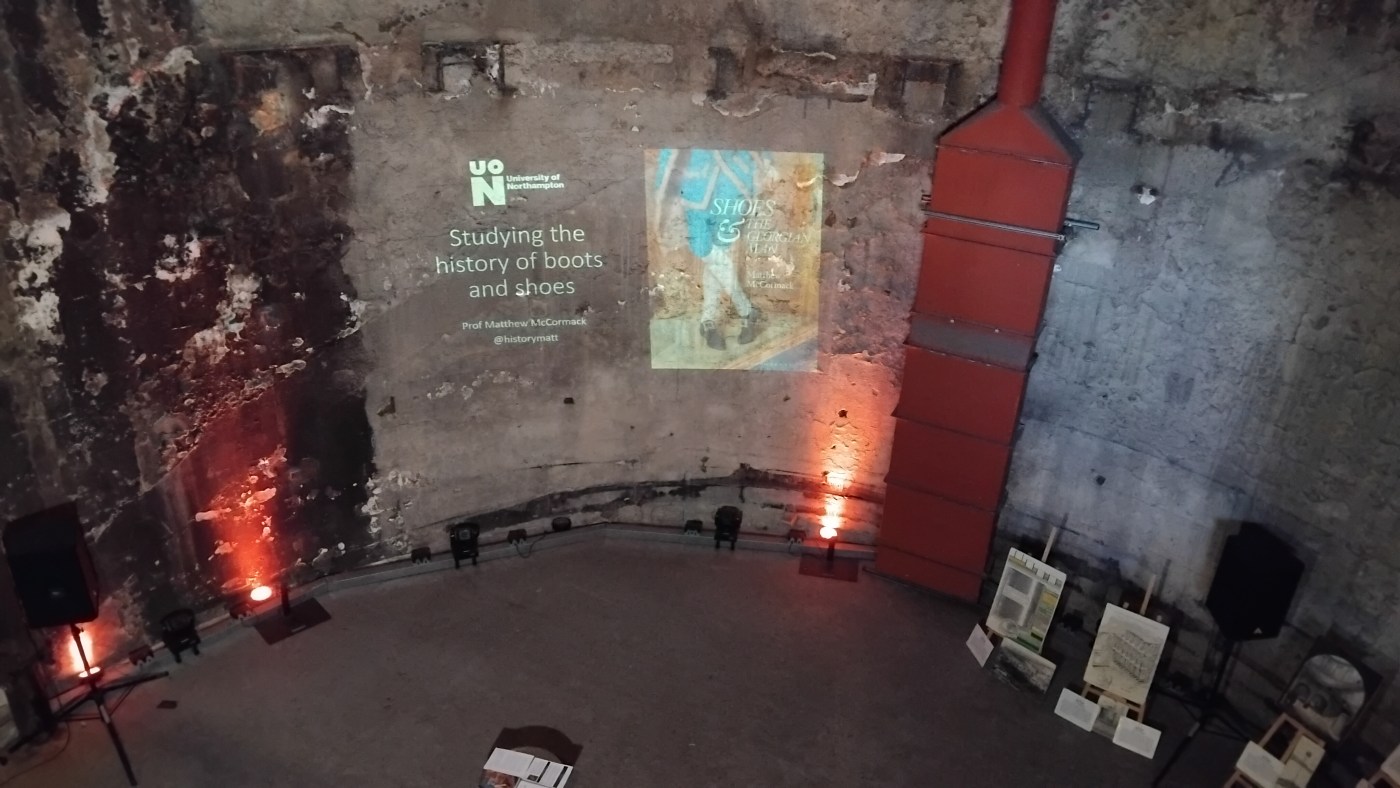
Yesterday I gave a talk in possibly the most interesting venue of my career.
The Brunel Museum in the east end of London got in touch because they had some buckles in their collection, which belonged to Marc Isambard Brunel (father of Isambard Kingdom Brunel). Northampton Museum had helped to identify the buckles, and the curator at the Brunel Museum had read my work on shoe buckles.
Staff and volunteers at the museum were also interested in the history of boots. Marc Brunel was famously horrified at the state of soldiers’ footwear when their returned from the Peninsular War, so resolved to invent a better process for their manufacture. He devised a machine that was so simple it could be operated by unskilled workers, and he employed disabled veterans in his factory in Battersea. They produced thousands of boots for British soldiers in the latter years of the Napoleonic Wars.
The museum therefore invited me to talk about my research on boots and shoes. They said in advance that the talk would be held in the tunnel shaft - which sounded intriguing - and that it might be chilly. But that did not prepare me for what I saw when I arrived.

The tunnel shaft is huge! In its day it had ornate wall coverings and a staircase, but it is now bare concrete, giving it a very industrial feel. It apparently gets cold the winter but it was pleasant on a warm March day. The acoustics are also interesting - it is very reverberant, like a church. It varies depending on where you stand and, just like the whispering gallery at St Paul’s, at a certain point your voice can be heard everywhere.
Originally the shaft served the Thames Tunnel, which was an engineering marvel when it opened in 1843, being the world’s first tunnel under a navigable river. Nowadays the tunnel is used by the London Overground, and every few minutes you can hear the trains of the Windrush Line under your feet. You can also hear the pump draining river water from the tunnel.
It is a wonderful space and the Brunel Museum uses it for lectures, concerts, performances and functions. It is also well worth visiting in its own right, as are the super museum displays in the Engine House next door. If you are in Rotherhithe, be sure to pay a visit.
Matthew McCormack
 HISTORY AT NORTHAMPTON